
Students facing real-life crisis in simulation

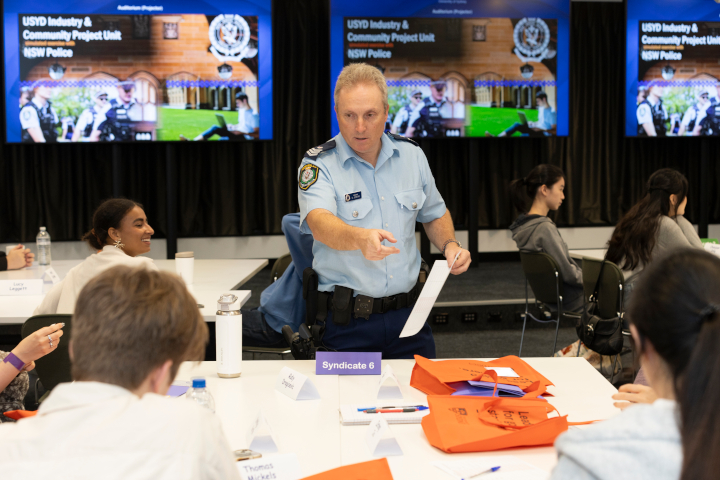
UNIVERSITY students have been given a rare opportunity to experience high-pressure police decision-making during a groundbreaking training exercise at NSW Police Force Headquarters in Parramatta.
For the first time, the specialist police training facility opened its doors to University of Sydney undergraduates, allowing 35 students to tackle a realistic child protection crisis.
The simulation centred on a fictional 13-year-old boy discovered carrying weapons at school, with emerging information suggesting possible neglect, drug use and domestic violence.
Students received unfolding updates through simulated emergency calls, emails, social media and police radio communications, forcing them to assess competing priorities and make difficult decisions.
Participants came from disciplines including law, psychology, social work, medicine, arts and data science.
The exercise was developed through a partnership between the University of Sydney, NSW Police Force and Department of Communities and Justice.
It concluded a semester-long university project examining decision-making in human services, particularly child protection.
University academic Dr Lyn Stevenson said the experience exposed students to complex ethical challenges they could encounter professionally.
“For others, the simulation built transferrable skills such as critical thinking, communication, juggling competing priorities and decision-making under pressure,” she said.
The initiative reflects growing interest in practical learning experiences that prepare graduates for workplaces increasingly influenced by artificial intelligence.
University Pro Vice-Chancellor Professor Adam Bridgeman said employers were seeking graduates with capabilities technology could not easily replicate.
“Employers are telling us they want graduates with the human skills AI lacks: curiosity, creativity, judgement and resilience in the face of uncertainty,” he said.
Final-year media and history student Freja Salt, 20, said the exercise offered valuable workplace experience rarely available to arts students.
“It’s been unlike any unit I’ve studied so far,” she said.
The Parramatta exercise also demonstrated the importance of cooperation between police, government agencies and professionals when responding to vulnerable children.
University organisers plan to continue the program next year, expanding simulation-based learning into additional disciplines.
The initiative could provide more students with opportunities to develop practical workplace skills while gaining insight into the difficult decisions confronting frontline community services.
Article Details
Editor Profile

editor
Publisher
Michael Walls
[email protected]
0407 783 413


